Project Overview
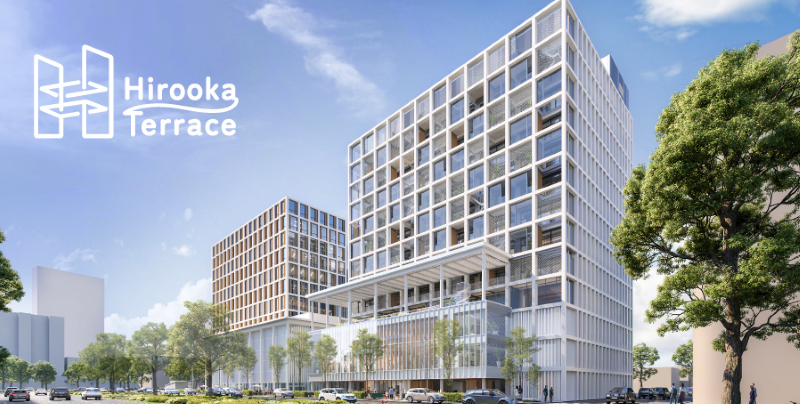
Project name: Hirooka Terrace
City:Kanazawa
Certification system: LEED v4 BD+C: New Construction
Date of certification: November 5, 2025
Certification level: Gold
Interviewee: Natsumi Nishimura CCI Group, Inc.
Corporate Planning Department, Facility Group
Interviewer: Junko Miyamoto GBJ Steering Committee Member
Miyamoto: Could you provide an overview of Hirooka Terrace, which has achieved LEED Gold certification?
Nishimura: Hirooka Terrace is a multi-tenant office building located just a four-minute walk from Kanazawa Station in Kanazawa City, Ishikawa Prefecture, Japan, adjacent to the headquarters of Hokkoku Bank. More than just an office building, the project was envisioned as a “hub for creating local vibrancy,” where people, communities, and businesses can naturally connect and interact to generate new value.
From an architectural perspective, the building adopts a spatial design that gently connects indoor and outdoor environments through semi-outdoor terraces and other transitional spaces, aiming to achieve a balance between comfort and environmental performance. Furthermore, in addition to enhancing energy efficiency and incorporating renewable energy, the building integrates sustainability with local identity through the use of regional materials and spatial design.
Miyamoto: The combination of a bank and an office building is quite unique. What was the motivation or inspiration behind CCI Group’s decision to develop such an impressive office building?
Nishimura: In Kanazawa, we have seen increased activity and movement of people following the opening of the Hokuriku Shinkansen, which has contributed to enhancing the city’s overall appeal and vibrancy. Along with these changes, we believe that the role expected of buildings has also evolved significantly. With growing expectations from the local community to create a more vibrant city, we aimed to develop a new hub where people, businesses, and the community could naturally connect, rather than simply serving as a workplace for our group companies or conforming to the traditional image of a bank. Through discussions and collaboration with various stakeholders, we explored ways to create spaces that support diverse working styles and user needs, including enhanced shared areas. These efforts ultimately led to the creation of today’s Hirooka Terrace.
Miyamoto: During my visit to the outdoor terrace and semi-outdoor terrace, I was able to directly experience the connection with the natural environment and felt how these spaces provide a sense of comfort and relaxation for office occupants. Could you share why CCI Group pursued LEED certification for Hirooka Terrace?
Nishimura: We pursue LEED certification not only because we wanted to create an environmentally responsible building, but also because we wanted to communicate our sustainability commitment to a broader audience.
Because LEED is recognized globally, we believed it would help demonstrate our sustainability commitment to investors, tenants, and other stakeholders. For Hirooka Terrace, a building owned and operated by a regional financial institution, we placed importance on demonstrating a new model for sustainable buildings. While Hokkoku Bank’s branches have achieved ZEB certification, we also recognized internally that globally recognized certifications such as LEED and WELL have significant value in communicating externally. We believed these certifications could enhance our appeal to investors and tenants, which led us to pursue LEED certification.
What makes this project unique is that we viewed LEED certification as a way to create value for the local community, rather than simply as a technical achievement. In addition, we believed that providing contractors involved in the construction of Hirooka Terrace with opportunities to gain experience with the requirements and technologies associated with LEED certification—which remains relatively uncommon in the Hokuriku region—would also contribute to the region as a whole.
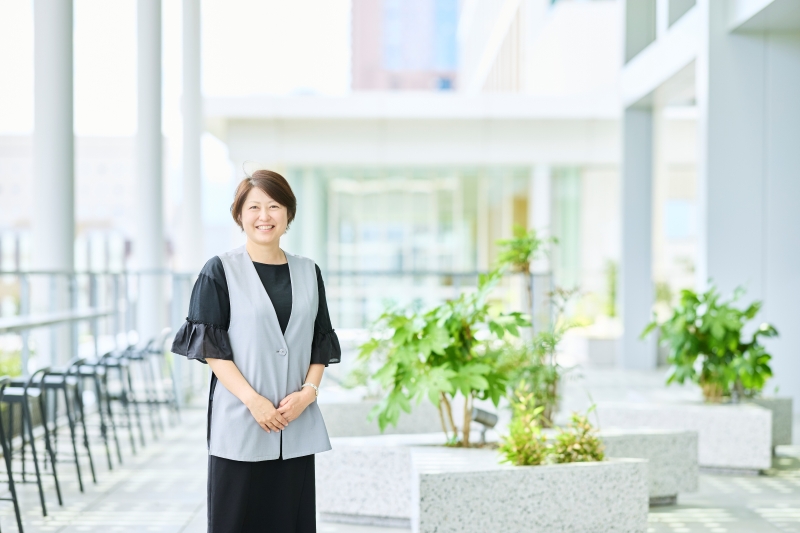
Photo of Natsumi Nishimura
Miyamoto: That’s a great point. In recent years, ESG considerations have become increasingly important not only among institutional investors but also individual investors, and the importance of green building certifications has grown as indicators that make environmental performance more visible. While LEED provides a clear framework for evaluating environmental performance, could you share any particular aspects you considered carefully or any challenges you encountered during the certification process?
Nishimura: The biggest challenge was finding the right balance between occupant comfort and energy efficiency. From the design stage, we carefully considered how to avoid compromising comfort while pursuing energy savings. In addition, obtaining certification required all project members—including designers, contractors, and the owner—to share a common goal and work together as one team. We therefore placed great emphasis on building consensus among all stakeholders from the very beginning. As a result, we believe the project not only improved the quality of the facility but also provided valuable knowledge and experience for everyone involved.
Personally, I also encountered challenges in communicating in English and understanding concepts originating from overseas. However, with the support of Woonerf, our LEED consultant, we were able to overcome these challenges, and I truly appreciate their support throughout the process.
Miyamoto: The balance between comfort and energy efficiency seems to be an ongoing challenge, as neither should be compromised. In this regard, Hirooka Terrace has adopted an air conditioning system that utilizes well water, which provides users with an easy-to-understand example of energy conservation, while also contributing to well-being by helping occupants feel more confident that the building is operating in an energy-efficient way.
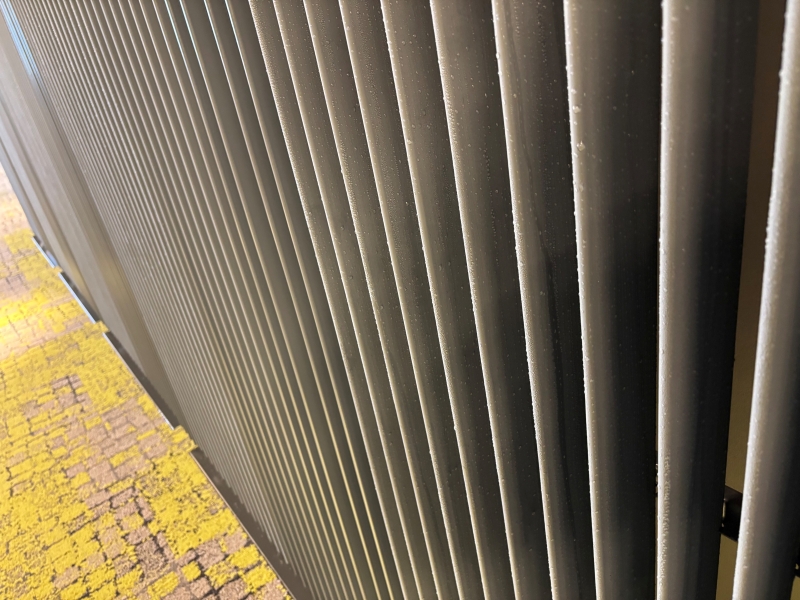
The air conditioning system that utilizes well water
Miyamoto: Hirooka Terrace has actively adopted on-site solar power generation. Could you share its key features and benefits?
Nishimura: At Hirooka Terrace, we have actively introduced solar power generation to maximize renewable energy generation. One of the key features of the project is that solar panels have been installed not only on the rooftop but also on the building’s eaves and parking area roofs. This approach has enabled us to maximize power generation while also making our environmental efforts visible to visitors. The use of renewable energy has contributed to reducing energy costs and lowering CO₂ emissions. One of the project’s distinctive features is that the solar installations were integrated into the building’s architectural design rather than simply installed as standalone equipment. Hirooka Terrace also achieved Nearly ZEB certification, becoming the first high-rise multi-tenant office building in Japan with a total floor area exceeding 20,000 square meters to achieve this certification.
Miyamoto: Could you share any feedback you have received from tenants?
Nishimura: Tenants have responded very positively to not only the building’s equipment performance but also the high quality of the working environment. For example, tenants have appreciated the connections between companies created through enhanced interaction spaces, the positive perception of working in an environmentally conscious office, and the convenient access from Kanazawa Station. In addition, many companies that are committed to sustainability have expressed that the building is highly aligned with their own values, and we recognize that it also contributes to enhancing corporate value. A distinctive feature of the project is that tenants value it not simply as a leased office, but as a “place for co-creating value.”
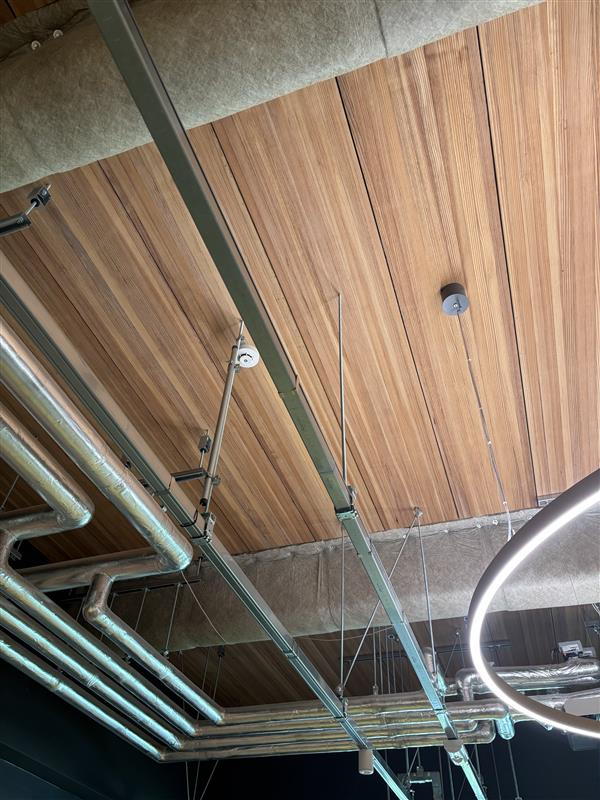
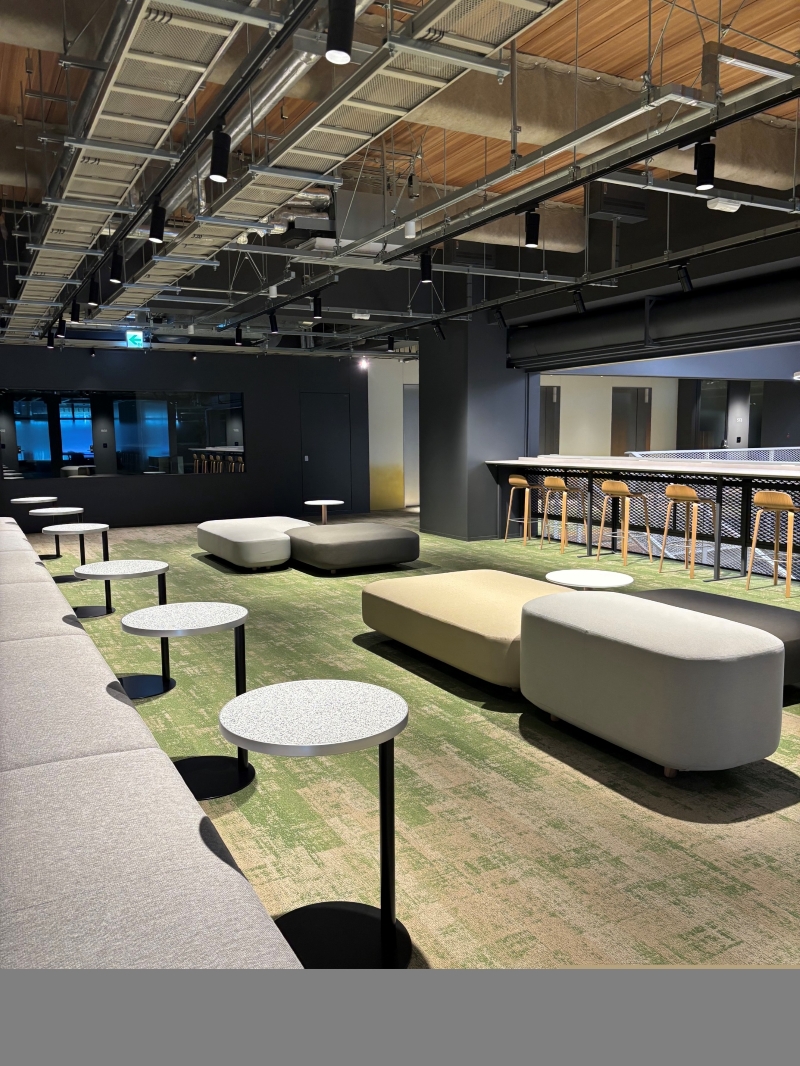
Miyamoto: I felt that the use of Ishikawa Prefecture-sourced wood for ceiling materials and fixtures, in addition to decorative elements, creates a sense of warmth and local character, which also contributes to the comfortable environment.
Miyamoto: Hirooka Terrace has also achieved WELL Equity Rating certification. Could you share its alignment with LEED certification and the benefits of achieving both certifications?
Nishimura: While LEED evaluates “environmental performance,” WELL is a certification that evaluates “human health and well-being.” By combining the two, we aimed to realize a facility value that places importance on both the “environment” and “people.”
WELL Equity Rating evaluates not only the building itself, but also human resource systems, ways of working, and spatial design. A distinctive aspect of this rating is that it focuses not only on whether systems and policies are in place, but also on whether they are actually functioning and can be implemented in practice. We selected WELL Equity Rating with the intention of advancing beyond conventional certifications focused primarily on safety measures toward an evaluation framework that represents “investment in people” (DEI and health-oriented management).
Achieving both LEED and WELL certifications has reinforced our confidence in this approach. Going forward, building on this achievement, we will further pursue our approach of valuing both the environment and people. In addition to strengthening our ability to attract tenants, we aim to contribute to the realization of a sustainable society together with the local community as a new model for sustainable buildings. We hope that this initiative will contribute to creating communities that can be passed on to future generations.
Miyamoto: I was truly impressed by the wonderful shared spaces and could only say, “I’m so envious.” Today, we live in an era where people can work remotely from anywhere, and the working environment differs from person to person. It made me want to choose an office space where both myself and the planet can feel comfortable.
Thank you very much for sharing this wonderful space and your valuable insights with us today.
日本語版はこちら